
Packing for Furniture Export
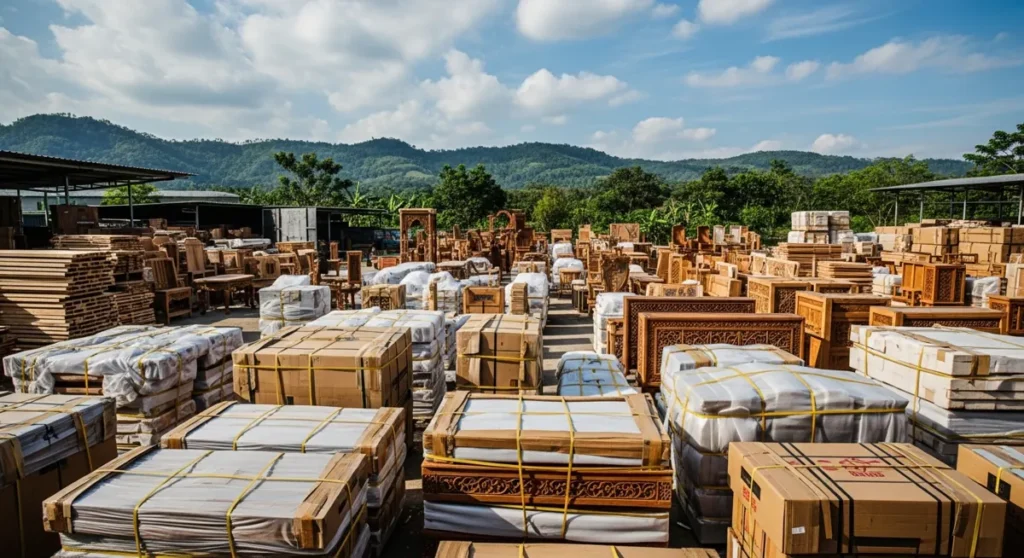
As an international buyer sourcing furniture from Indonesia, understanding the intricacies of packing is vital to ensure your goods arrive safely and intact. The Indonesian furniture export industry, known for its diverse materials and designs, requires meticulous attention to packing and shipping processes. From the legalities of SVLK certification to optimizing container space, each step is crucial to maintaining the quality and legality of your purchase.
Understanding SVLK Certification
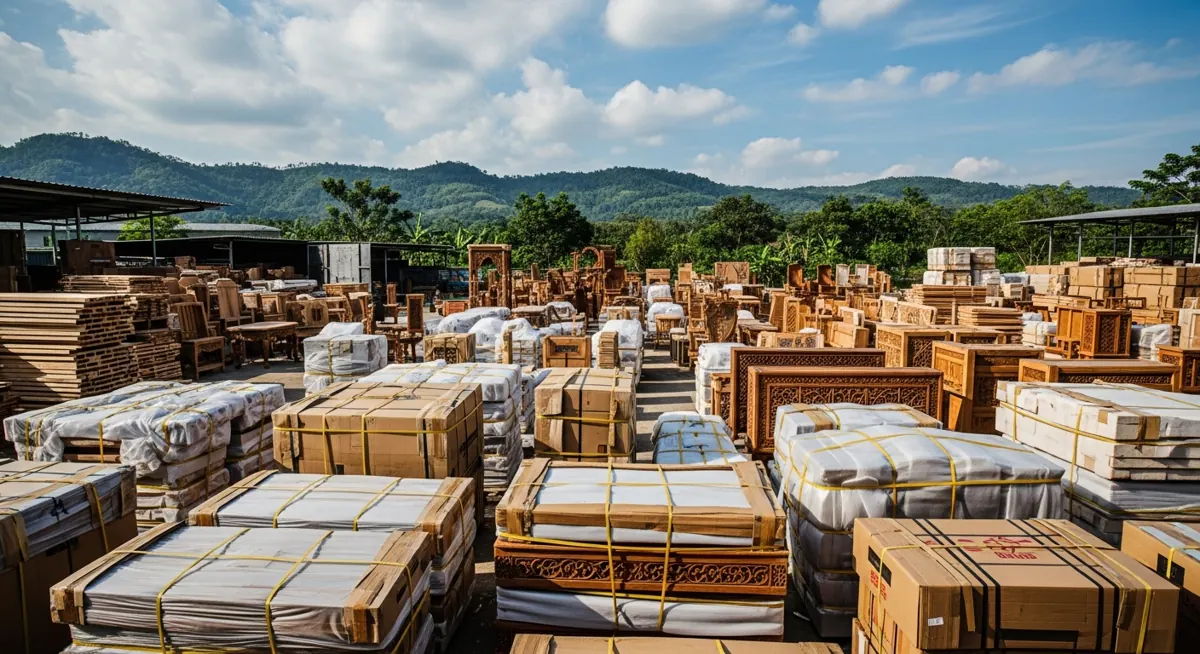
The SVLK (Sistem Verifikasi Legalitas Kayu) is a mandatory certification for all Indonesian wood-product exporters. It verifies that the timber is legally harvested and traceable, ensuring compliance with international regulations like the EU Deforestation Regulation (EUDR) and the US Lacey Act. Each furniture export must include a V-Legal Document, valid for three years with annual surveillance. While SVLK provides a strong legality baseline, some factories may offer FSC certification for additional sustainability, although it is not a substitute for SVLK. Understanding these certifications is crucial for buyers aiming to meet due diligence requirements.
Optimizing Container Space
Efficient use of container space is essential for cost-effective shipping. Usable loading capacities are approximately 28 CBM in a 20ft container, 58 CBM in a 40ft container, and 68 CBM in a 40ft High Cube container. Bulky items like upholstered or woven furniture typically fill the volume before reaching weight limits, whereas dense, knock-down items may hit weight limits first. Understanding these dynamics allows for strategic packing to maximize space and minimize costs. For more detailed insights, visit our furniture export shipping process page.
Meeting Minimum Order Quantities (MOQs)
Indonesian furniture exports typically require a minimum order of one 20ft container, approximately 25-28 CBM. Per-item MOQs range from 5-20 pieces for solid-wood furniture and 10-30 pieces per model or color for woven or rattan items. Mixed-model and mixed-material containers are standard, provided each item meets its MOQ. This flexibility allows buyers to customize their orders while adhering to logistical requirements. For further details on quality control, refer to our quality control furniture page.
Choosing the Right Incoterms
The choice of Incoterms significantly impacts the responsibilities and costs associated with shipping. FOB (Free on Board) is the most common term, where the seller handles export clearance and loading at the port, and the buyer arranges sea freight and insurance. CFR (Cost and Freight) and CIF (Cost, Insurance, and Freight) are also available. Main export ports include Tanjung Perak in Surabaya, Tanjung Emas in Semarang, and Benoa in Bali. Each term offers different levels of control and risk, so buyers should select based on their logistical capabilities and preferences.
Managing Lead Times
Production lead times for Indonesian furniture typically range from 30-60 days, depending on order size and finish requirements. Sea-freight transit times vary by destination: approximately 3-5 weeks to the US, EU, and Australia, with shorter durations to the Middle East and Asia. These are approximate and can vary based on route and season. Buyers should confirm current schedules to ensure timely delivery. For more information, explore our lead-time furniture export page.
Materials and Customization Options
Indonesian furniture is renowned for its diverse materials, including solid teak, reclaimed teak, mahogany, suar, natural rattan, synthetic rattan, water hyacinth, seagrass, genuine leather, and stone or terrazzo tops. Factories offer OEM/ODM services, manufacturing to a buyer’s specifications with pre-production samples. This customization allows buyers to tailor designs to their market needs. The historic hub of Jepara is famous for teak and classical designs, while Bali leads in contemporary styles. Learn more about teak and rattan for further context.
Payment Terms and Pricing
Payment terms typically involve a 30-50% deposit by T/T (bank transfer) to start production, with the balance due against a copy of the Bill of Lading. Terms can be negotiated for repeat buyers. Prices are quoted per order based on material, grade, specification, finish, volume, and Incoterm. We invite you to request a quote to receive tailored pricing that meets your specific needs. For inquiries, please visit our contact page.
Quality Control and Assurance
Quality control is a critical aspect of the furniture export process. Indonesian manufacturers employ comprehensive QC protocols to ensure product consistency and durability. These include pre-production inspections, in-line production checks, and final random inspections before loading. Buyers are encouraged to specify their quality standards, which can be aligned with international benchmarks such as ANSI/BIFMA for office furniture or EN standards for home furniture. Regular audits and third-party inspections can further enhance confidence in product quality. Detailed information on our QC procedures can be accessed on our quality control furniture page.
Finishing and Material Grades
The finishing of furniture significantly impacts its aesthetic appeal and durability. Indonesian manufacturers offer a wide range of finishes, from natural oils and waxes to lacquer and polyurethane coatings. Each finish has its own set of benefits, such as enhancing grain patterns or providing a protective layer against moisture and wear. Material grading is equally important, especially for solid wood products. Grades range from A to C, with A-grade indicating the highest quality with minimal knots and uniform coloration. Understanding these options allows buyers to make informed decisions that align with their market expectations.
Packing and Shipping Techniques
Proper packing is essential to protect furniture during transit. Indonesian exporters use a variety of packing techniques, including carton boxes, bubble wrap, and corner protectors, to ensure products arrive in pristine condition. Palletizing is a common practice for larger shipments, facilitating easier handling and reducing the risk of damage. Additionally, wooden crates may be used for fragile or high-value items. Exporters often provide a packing list and photos of packed goods to assure buyers of the shipment’s readiness and security. Detailed packing instructions can be customized per buyer’s requirements to match specific shipping needs.
Ready to explore the possibilities of Indonesian furniture for your business? Contact us today to request a quote and find out how we can meet your sourcing needs. Our team is here to ensure a smooth and reliable procurement process.